
1:1 Meeting Questions and Templates for Managers
A ready-to-use 1:1 template plus a question bank by category — career, blockers, feedback, wellbeing — so your 1:1s stop being status updates.
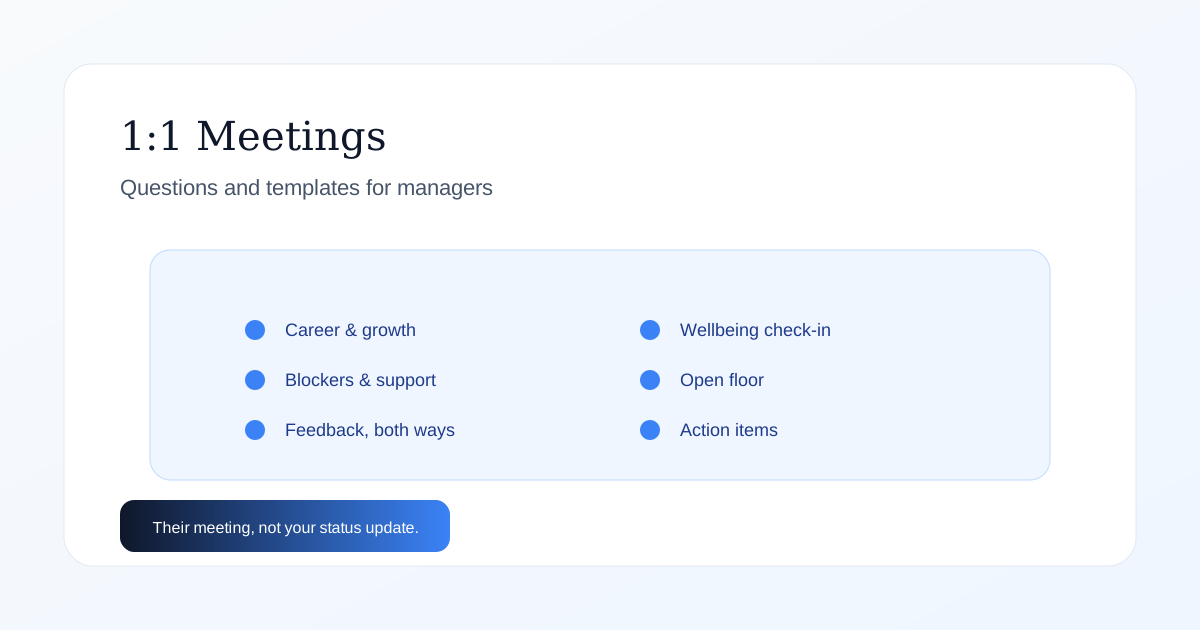
Most 1:1s are a status update. They shouldn't be.
If your 1:1s are mostly "what are you working on" and "any blockers," you already have that information from standup and the sprint board. A 1:1 that just repeats it is a meeting people quietly start canceling.
A good 1:1 is the one place in the week that belongs to the other person — their growth, their concerns, their feedback for you. This guide gives you a repeatable structure, a question bank organized by category, and a template you can start using in your next 1:1.
The four-part structure that works for almost every 1:1
- Open floor (first, always): "What's on your mind?" — let them set the agenda before you set yours.
- Growth & blockers: what's helping them move forward, what's getting in the way.
- Feedback, both directions: something specific for them, and a genuine ask for feedback on you.
- Close with an action: one concrete next step either of you owns before the next 1:1.
Putting "open floor" first, not last, is the single biggest change most managers can make. If it's last, it never happens because you run out of time. If it's first, you find out what actually matters to them before you spend the meeting on your own agenda.
A true story: the 1:1 that finally became useful
An engineering manager (call him Deniz) ran 1:1s for a year that were 90% status updates. Attendance and energy were both dropping — people were showing up because it was on the calendar, not because it was useful.
He changed exactly one thing: he opened every 1:1 with "What's on your mind, and what's off my radar that I should know about?" — nothing else changed. Within three 1:1s, two team members raised concerns he'd had no idea about: one was quietly job hunting over an unclear growth path, the other was overloaded on a project nobody had flagged as at-risk.
The status update questions weren't wrong. They just weren't finding the things that actually mattered — and a single open question, asked first, surfaced both in under two weeks.
The question bank: career and growth
- "What's one thing you'd want to be doing more of in six months?"
- "Is there a skill you want to build that our current work isn't giving you a chance to practice?"
- "What's one project from the last quarter you were proudest of, and why?"
- "If you had to pick your next stretch assignment, what would it be?"
The question bank: blockers, feedback, and wellbeing
Blockers & support
- "What's slowing you down that isn't visible on the board?"
- "Is there a decision you're waiting on from me or from someone else?"
Feedback, both directions
- "Here's something specific I noticed this week: [SBI-style observation]."
- "Is there anything I did recently that made your work harder instead of easier?"
Wellbeing
- "On a scale of 1-5, how sustainable does your current workload feel?"
- "What's one thing outside work I should know is affecting your energy right now?" (ask, don't require an answer)
🎙️ Stop scribbling notes mid-conversation: Meeting Assistant records and transcribes the 1:1, then pulls out action items and follow-ups automatically — so you can actually listen instead of writing while they talk. Try Meeting Assistant →
Mistakes that quietly kill 1:1s
- Cancelling first when busy: it signals the 1:1 is optional, and people stop bringing you real issues once they believe that.
- Only talking about work: a 1:1 with zero space for growth or wellbeing is just a status meeting with a different name.
- Doing all the talking: if you're speaking more than they are, you're not getting the information a 1:1 exists to surface.
- No follow-through: raising a blocker and hearing nothing about it for three weeks teaches people to stop raising blockers.
A copy-paste 1:1 agenda template
- 0-5 min — Open floor: "What's on your mind?"
- 5-15 min — Growth & blockers: one growth question, one blocker question.
- 15-25 min — Feedback both ways: one specific observation from you, one honest ask for feedback on you.
- 25-30 min — Close: confirm one action item each, and check in on the last meeting's action items first.
Keep a running doc per person across 1:1s — not for surveillance, but so growth conversations build on each other instead of restarting from zero every time.
Kültür Kazanır: Sahadan Ofise Çeviklik
Mikro yönetim, rapor takıntısı ve güven eksikliğini sahadan okuyun. Futbol sahasındaki dinamikler ile iş dünyasındaki kontrol refleksini paralel bir anlatımla keşfedin.
Türkçe e-kitap
Beyond 1:1s: hearing the whole team, not just one person at a time
1:1s are great for individual signal but slow for team-wide patterns — if three people mention the same blocker in three separate 1:1s, you might not connect the dots for weeks.
📊 Catch the pattern faster: FeedbackLoop collects sprint-by-sprint feedback from the whole team by email and analyzes it with AI, so recurring issues surface in weeks, not months. Try FeedbackLoop →
FAQ
- How long should a 1:1 be? 30 minutes is the most common default. 20 minutes works if it's weekly; go to 45 if it's every two weeks.
- How often should we meet? Weekly for most direct reports. Every two weeks can work once trust and rhythm are well established.
- Who should set the agenda? They should, first — open floor before your topics. A shared doc they can add to beforehand works well.
- What if they never bring anything up? Silence often means low trust, not low need. Keep the open floor question consistent and be patient; it can take several 1:1s before people test whether it's safe to actually use it.
- Should 1:1 notes be shared with HR or kept private? Career-growth notes can be shared with the person's consent; anything about wellbeing or personal context should stay private and off any official record.
Try this in your next 1:1
In your very next 1:1, open with just one question: "What's on your mind, and what's off my radar that I should know about?" Say nothing else until they've answered fully — resist the urge to fill the silence.
Do this consistently for a month and track what changes: how much they talk relative to you, how specific their answers get, and whether anything surfaces that wouldn't have come up in a status-update-style meeting.
Ücretsiz PDF
Geri Bildirim Hazırlık Seti — Ücretsiz PDF
3 doldurulabilir şablon: SBI hazırlık formu, vermeden önce 7 kontrol ve 12 zor konuşma açılış cümlesi.
- 1SBI hazırlık formu
- 27 kontrol sorusu
- 312 açılış cümlesi
Spam göndermiyoruz. İstediğin zaman abonelikten çıkabilirsin.
İlgili Aracı Dene
Ses veya video kaydını yükle ya da başlat — AI içeriği tanır, özetler ve sana özgü öneriler sunar. Toplantı, ders, sohbet, mülakat, sesli not.
Kayıt aracı->Kültür Kazanır: Sahadan Ofise Çeviklik
Mikro yönetim, rapor takıntısı ve güven eksikliğini sahadan okuyun. Futbol sahasındaki dinamikler ile iş dünyasındaki kontrol refleksini paralel bir anlatımla keşfedin.
Kimler için?
Scrum Master, Agile Coach, Product Owner, Team Lead, Engineering Manager
Türkçe e-kitap