
Difficult Conversations at Work: Scripts and Examples for Every Scenario
One reusable structure plus ready scripts for saying no to a stakeholder, resolving peer conflict, and delivering bad news — with real examples and an FAQ.
Why difficult conversations feel harder than they need to be
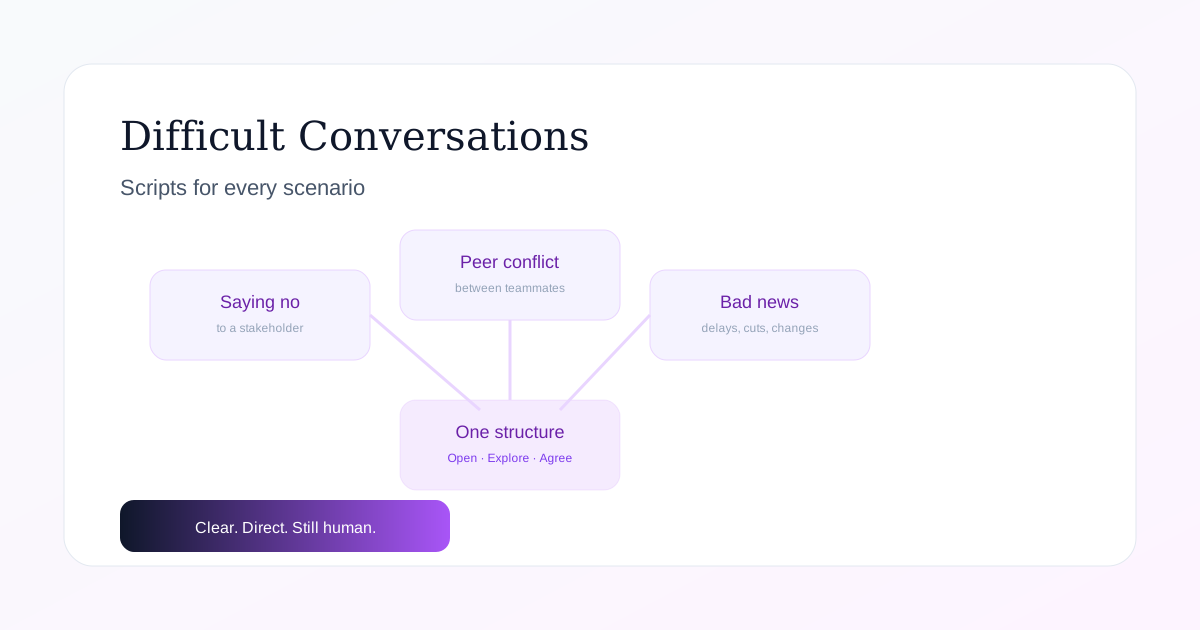
Telling a stakeholder no. Stepping into a conflict between two teammates. Delivering news nobody wants to hear. These conversations feel completely different from each other — but the reason they're all hard is the same: you're worried that being direct will damage the relationship.
The fix is not a script for every possible scenario. It's one reusable structure flexible enough to handle all of them, plus enough real examples that you're not starting from a blank page the next time one of these lands on your calendar.
One structure for every difficult conversation
- Open: state the topic plainly in one sentence, no preamble, no burying it in small talk.
- Explore: share what you observed and ask what they see — this is a conversation, not an announcement.
- Agree: land on a concrete next step, even a small one, before the conversation ends.
This works whether the conversation is two minutes or twenty. The structure doesn't change; only how much time you spend in "Explore" does.
A true story: the stakeholder conversation everyone was avoiding
A Product Owner (call her Merve) had a stakeholder repeatedly asking to add scope mid-sprint. Three sprints in a row, the team said yes, and three sprints in a row, they missed the sprint goal. Everyone complained about it privately. Nobody said anything to the stakeholder directly.
Merve finally opened with: "I want to talk about mid-sprint requests — we've said yes three times and missed our goal three times. I don't think that's working for either of us." No blame, just the pattern, stated plainly. The stakeholder hadn't connected the dots and agreed immediately to a same-day triage instead of same-day inclusion.
The conversation that felt like it would damage the relationship actually fixed the thing that was quietly damaging it already.
Script: saying no to a stakeholder
"I want to help with this, and I can't fit it into this sprint without risking what we already committed to. Here are two options: we swap it in for something else, or it's first in line next sprint. Which works better for you?"
This works because it's not a flat no — it's a no plus two real options, which keeps the stakeholder in control of the trade-off instead of feeling shut down.
Script: conflict between two teammates
"I've noticed some tension between you two in planning the last couple of sprints, and I want to understand what's going on before it affects the team. Can we talk — the three of us — about what's not working?"
Name the pattern, not a specific person's fault. Bring both people into the same room rather than triangulating through separate side conversations, which usually makes things worse, not better.
Script: delivering bad news
"I have an update that's not what we hoped for: [the news, stated plainly]. Here's what we know, here's what we're doing about it, and here's what I need from you."
Lead with the news, not a long wind-up. People can tell when bad news is coming from the tone before you say it — the wind-up just extends the anxiety without adding clarity.
🎯 Practice the version that doesn't go well: Mastery lets you run these exact scenarios — saying no, defusing conflict, delivering bad news — against a Socratic AI that pushes back like a real stakeholder would, so you're not improvising the hard part live for the first time. Try Mastery →
The mistakes that turn a hard conversation into a worse one
- Burying the point: ten minutes of context before the actual topic. Say the topic first, then give context if they ask.
- Doing it over chat: text strips tone, and difficult topics need tone. Voice or video first, written summary after.
- No proposed next step: ending on the problem instead of a next action leaves both people unsure what happens now.
- Rehearsing your part but not theirs: preparing what you'll say without thinking about how they'll likely respond means you freeze at the first pushback.
Kültür Kazanır: Sahadan Ofise Çeviklik
Mikro yönetim, rapor takıntısı ve güven eksikliğini sahadan okuyun. Futbol sahasındaki dinamikler ile iş dünyasındaki kontrol refleksini paralel bir anlatımla keşfedin.
Türkçe e-kitap
When you need a coach in the room (and you don't have one)
Some conversations are high-stakes enough that you'd genuinely want a coach to help you prepare — a facilitation decision gone wrong, a conflict that's been simmering for months, a stakeholder relationship worth protecting.
🧭 Get a second opinion before the real conversation: Scrum Master Coach walks through complex, specific scenarios with you and gives feedback on your facilitation and framing choices before you're in the room for real. Try Scrum Master Coach →
FAQ
- What's the single most important thing to get right? Opening with the actual topic instead of burying it. Everything else is easier once the topic is on the table clearly.
- Should I write the conversation out beforehand? For high-stakes ones, yes — write your Open sentence word for word. You don't need to script the rest; the structure carries you.
- What if they get defensive or upset? Slow down, not down-shift into the topic. "I can see this is frustrating — I still want to figure this out together" acknowledges the reaction without abandoning the conversation.
- Async or live? Live (voice or video) for anything with emotional weight. Async is fine for the follow-up summary, never for the first delivery of hard news.
- How is this different from the SBI feedback model? SBI is specifically for behavior feedback. This structure (Open-Explore-Agree) is broader — it also covers conversations that aren't about someone's behavior at all, like saying no or delivering bad news.
This week's practice: pick one overdue conversation
Think of one difficult conversation you've been putting off. Write your Open sentence — one plain sentence stating the topic, no cushioning. Have the conversation this week using Open-Explore-Agree.
Most people report the same thing afterward: the anticipation was worse than the conversation itself. That gap — between how bad it feels to prepare for and how manageable it actually is — is the whole reason this skill is worth building deliberately instead of hoping it comes naturally under pressure.
Ücretsiz PDF
Geri Bildirim Hazırlık Seti — Ücretsiz PDF
3 doldurulabilir şablon: SBI hazırlık formu, vermeden önce 7 kontrol ve 12 zor konuşma açılış cümlesi.
- 1SBI hazırlık formu
- 27 kontrol sorusu
- 312 açılış cümlesi
Spam göndermiyoruz. İstediğin zaman abonelikten çıkabilirsin.
İlgili Aracı Dene
Zor iş anlarını AI karakterle prova et. Konuş, yıldızlı skill sinyali al, gelişimini takip et.
Keşfe başla->Sprint problemini tanımla, hipotez kur, deney planı çıkar ve takip döngüsünü yönet.
Koç agent'i aç->Kültür Kazanır: Sahadan Ofise Çeviklik
Mikro yönetim, rapor takıntısı ve güven eksikliğini sahadan okuyun. Futbol sahasındaki dinamikler ile iş dünyasındaki kontrol refleksini paralel bir anlatımla keşfedin.
Kimler için?
Scrum Master, Agile Coach, Product Owner, Team Lead, Engineering Manager
Türkçe e-kitap